Phonological awareness activities do not have to begin with worksheets, pencils, or a child sitting still at a table. Long before children decode print, they can learn to hear rhythm, rhyme, syllables, and sounds through talking, singing, chanting, and playful listening.
That matters as states and schools place more attention on evidence-based literacy instruction. Families can support the same foundation at home through everyday speech sound development without turning early literacy into homework.
Children Hear Word Patterns Before They Study Letters
Before children are ready to connect sounds with print, they are already surrounded by patterns in spoken language. Songs, chants, rhymes, family names, silly voices, and repeated story phrases all help children notice that words have sounds they can hear and play with.
This early listening work can happen during ordinary routines. A caregiver might clap a child’s name, stretch the first sound in “ssssoup,” or laugh about words that rhyme during bath time, cleanup, or a walk outside.
The goal is not to make children memorize reading rules before they are ready. It is to help them become curious about how words sound, where they begin, how long they feel, and which words share similar patterns.
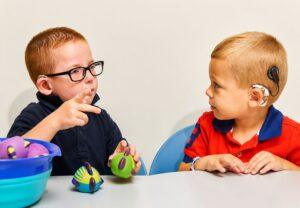
When adults keep sound play relaxed and social, children can participate through speech, gestures, movement, AAC, pointing, or laughter. That makes early literacy more accessible because the activity begins with interaction instead of paperwork.
Phonological Awareness Starts in Spoken Language
Phonological awareness is the ability to notice and play with the sound structure of spoken words. It includes hearing rhymes, clapping syllables, noticing beginning sounds, and eventually identifying individual sounds in words.
It is not the same as phonics. Phonics connects sounds with letters. Phonological awareness can happen with eyes closed because it begins with listening.
The Institute of Education Sciences’ foundational reading skills guide recommends developing awareness of speech-sound segments and linking them to letters as children move into reading instruction.
For young children, the early path should feel oral, rhythmic, and social. Sound play comes before paper practice.
Listening Games Build the Ear for Reading
Children first need practice noticing sounds as sounds. That can happen during songs, nursery rhymes, clapping games, silly voices, and repeated phrases in books.
A child who hears that “cat” and “hat” sound alike is noticing rhyme. A child who claps “ba-na-na” into three beats is hearing syllables. A child who laughs at “Molly Mouse makes muffins” is hearing alliteration.
These moments are not random entertainment. They help children separate the meaning of a word from the sound pattern inside it.
| Listening Activity | Skill Supported | Everyday Example |
| Rhyming songs | Hearing similar endings | “Star” and “car” sound alike |
| Syllable clapping | Hearing word parts | Clap “el-e-phant” |
| Name games | Noticing first sounds | “Sam starts with sss” |
| Sound hunting | Connecting sounds to objects | Find things that start with /b/ |
| Silly substitutions | Flexible sound play | “banana” becomes “fanana” |
The best activities are short. A two-minute rhyme game in the car can be more useful than a worksheet that lasts too long.
Conversation Gives Sounds Meaning
Children learn best when sound play stays connected to real communication. A rhyme about a pet, a chant during cleanup, or a syllable game using family names gives the activity emotional and practical value.
Reading Rockets describes phonological awareness as an awareness of spoken language sounds, including rhymes, syllables, and phonemes. Parents can support this by talking about words children already know.
A child does not need to master every sound task before enjoying books. Shared reading, storytelling, and songs allow children to hear patterns while also building vocabulary and comprehension.
Sound awareness grows best inside meaningful language, not isolated drills.
Worksheets Can Miss the Point
Worksheets may ask children to circle rhyming pictures or mark beginning sounds. Some children enjoy that, especially as they approach kindergarten. Others guess, memorize the format, or focus more on the page than the listening task.
If a child cannot yet hear the sound difference, a worksheet may not teach it. The adult’s voice, repetition, pacing, and feedback are usually more helpful.
Instead of asking a child to complete a page on syllables, try tapping names at breakfast: “Ma-ma, Dad-dy, A-lex-an-der.” Instead of drilling rhymes, make a silly family rhyme chain.
Children who communicate with gestures, AAC, or limited speech can still participate. They can choose between pictures, tap beats, point to a matching rhyme, or laugh when a sound changes.
Families Can Adjust Without Adding Pressure
Start with easier sound units. Rhymes and syllables are usually easier to notice than individual phonemes. A child may hear that “puppy” has two claps before identifying the first sound in “pig.”
Follow the child’s interest. Dinosaurs, snacks, names, vehicles, and favorite characters can all become sound-play material.
Adults can model answers rather than testing constantly. “Boat and goat rhyme. They sound the same at the end,” gives the child a clear example without creating pressure.
Playful repetition is more useful than correction. If the child gives a wrong rhyme, respond warmly and offer a close model.
Early Literacy Signals Are Broader Than One Skill
Phonological awareness is important, but it is not the whole of early literacy. Children also need vocabulary, background knowledge, comprehension, conversation, print awareness, and motivation to engage with books.
Michigan’s recent move to require K–5 reading and language-arts teachers to complete evidence-based literacy training by the 2031–32 school year reflects a wider push toward stronger foundations. Reports noted that 38.9% of Michigan third graders were reading proficiently, while thousands of educators had completed or enrolled in training.
At home, the practical lesson is not to buy more worksheets. It is to make listening and talking part of daily life.
Phonological awareness activities are strongest when children hear sounds in songs, names, stories, jokes, and routines. The goal is not a perfect performance, but a child who begins noticing that spoken words have parts they can hear, move, and play with.
FAQ’s
What age should phonological awareness activities begin?
Simple sound play can begin in preschool through songs, rhymes, clapping, and listening games. More advanced phoneme tasks usually develop later and should stay playful and developmentally appropriate.
Is phonological awareness the same as phonics?
No. Phonological awareness is about hearing sounds in spoken language. Phonics connects those sounds to letters. Children often need oral sound awareness before letter-sound instruction makes sense.
Can children who do not speak much practice these skills?
Yes. Children can clap syllables, point to rhyming pictures, choose matching sounds, use AAC, gesture, or participate through listening and shared attention.