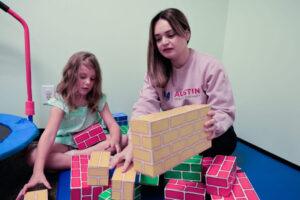
For young children at risk for Developmental Language Disorder, caregiver grammar resources can make daily talk more intentional without turning family life into a therapy session. The most useful resources help adults respond to a child’s message, model slightly longer sentences, and create many low-pressure chances to hear and try grammar in real routines.
Developmental Language Disorder, often shortened to DLD, affects how children understand and use language even when there is no clear biomedical cause. Families may first notice that a child uses shorter sentences, leaves off small grammar markers, has trouble following longer directions, or seems to understand less than expected for age. These signs do not confirm DLD on their own. A speech-language pathologist can evaluate the child’s language profile and help decide which supports fit.
This page focuses on resources for caregivers rather than hiring or staffing topics. For employment-focused information within the same network of sites, head over to Alliance Recruitment.
Why Caregiver Grammar Resources Matter
Grammar Growth Often Needs Repeated, Responsive Input
Grammar is not only about correcting errors. Young children learn sentence patterns through repeated exposure, meaningful turns, and chances to connect words with real actions. For a child at risk for DLD, that learning may take more time and more carefully supported practice. A caregiver can provide that practice during meals, play, getting dressed, story time, car rides, and bath time.
The strongest caregiver resources tend to teach adults what to do in the moment. Instead of asking a child to repeat a sentence many times, the adult can expand what the child already said. If the child says, “dog run,” the caregiver might respond, “Yes, the dog is running fast.” The child hears a clearer grammar model while the conversation continues.
Caregiver Grammar Resources In Daily Talk
Caregiver grammar resources are most helpful when they are specific enough to use right away. A handout that says “talk more” is less useful than a coaching note that says, “Wait after your child speaks, repeat the message with one extra grammar detail, then keep the activity going.” This kind of resource gives caregivers a doable action and reduces pressure on both adult and child.
Families raising bilingual children can apply these strategies in the language or languages they use naturally at home. A child who hears Spanish, English, Arabic, Mandarin, or another home language still benefits from responsive turns, expansions, and shared reading. The goal is not to replace a home language. The goal is to strengthen communication through meaningful interaction. If a child is being evaluated or treated, bilingual language exposure should be discussed with a qualified professional who understands the child’s language environment.
What The 2026 Evidence Supports
Caregiver-Mediated Intervention Has Measurable Benefits
A systematic review published on August 21, 2026, examined caregiver-mediated spoken language interventions for children under five at risk of DLD. The review included 947 children in randomized controlled trials and 1,407 participants across the wider evidence base. It found that caregiver-mediated interventions significantly improved receptive and expressive language outcomes compared with usual care or waitlist controls, with stronger effects reported for children already diagnosed with DLD and moderate improvements for children considered at risk systematic review.
That evidence supports caregiver involvement, but it should not be read as a promise that every child will make the same gains. Studies differ in how intervention was delivered, how long it lasted, and which children were included. Some children may need direct therapy, classroom supports, assistive communication tools, hearing checks, developmental evaluation, or a mix of services.
Grammar May Take Longer Than Vocabulary
The research notes for this topic also describe 2026 findings from an Enhanced Milieu Teaching–Sentence Focused intervention delivered through caregiver coaching by telehealth. In that work, early vocabulary outcomes were mixed at 6 months, while grammar gains appeared later. The same notes indicate that many children in both intervention and control groups still scored below average on grammar measures after 42 months of age.
For families, that pattern matters. It suggests that grammar support should be steady and patient. A child may learn new words before consistently using sentence endings, pronouns, verb forms, or longer sentence structures. Caregivers should watch for small changes: more two-word combinations, clearer subject-verb patterns, more attempts to describe actions, or better understanding of sentence meaning.
Turning Everyday Routines Into Grammar Practice
Use Expansions, Recasts, And Models
These caregiver grammar resources can be built into common routines. During play, a caregiver can describe what the child is doing: “You are stacking the blocks.” During snack, the adult can model grammar around requests: “You want more crackers.” During clean-up, the adult can use short action sentences: “The cars go in the box.”
- Expansion: Add one or two grammar details to the child’s message. Child: “baby sleep.” Adult: “The baby is sleeping.”
- Recast: Restate the child’s idea with a clearer grammar form. Child: “Her goed.” Adult: “She went to the door.”
- Focused model: Repeat one target pattern across a routine. “The bear is eating. The dog is eating. The baby is eating.”
- Choice question: Offer two grammar-rich options. “Is the dog running or sleeping?”
These strategies work best when they feel conversational. A caregiver does not need to correct every error. Too much correction can interrupt the child’s message and reduce participation. It is often better to model the sentence naturally, pause, and continue the interaction.
Shared Reading Gives Grammar A Clear Context
Shared book reading is a practical setting for grammar support because pictures, actions, and repeated story lines give children context. Caregivers can talk about who is doing what, what happened before, and what might happen next. That creates natural practice with pronouns, verbs, past tense, sentence combining, and descriptive language.
A caregiver might pause on a page and say, “The girl is washing the dog,” then later, “Now the dog is shaking water everywhere.” If the child says, “dog wet,” the adult can expand: “Yes, the dog is wet because he had a bath.” This keeps grammar tied to meaning rather than isolated drills.
For families who want more detail about intervention design, caregiver-mediated grammar support offers related guidance on coaching, follow-up, and realistic expectations.
Choosing Resources Without Overloading Families

Look For Coaching, Not Just Information
A good resource should help caregivers practice, reflect, and adjust. Printed tips can be useful, but many adults benefit from seeing a strategy demonstrated and then receiving feedback. The U.S. Department of Education’s Institute of Education Sciences describes Parents Plus, a project that began on September 6, 2022, and runs through August 31, 2027. The project is designed to support vocabulary and morphosyntactic skills among preschoolers with DLD by adding caregiver-focused Parents Plus support to existing intervention services Parents Plus project.
Families do not need to use every worksheet, app, or video they find. Too many tools can make support feel scattered. It is often better to choose one routine, one strategy, and one target sentence pattern for a short period. For example, a family might focus on “is + action word” during bath time and play for two weeks, while the clinician tracks whether the child notices, understands, or begins using the pattern.
Use Progress Checks That Match The Goal
Progress does not always appear as perfect sentence production. A child may first show better understanding, more attention to adult models, or more attempts to combine words. Caregivers can keep brief notes, such as the longest sentence the child used during play or whether the child understood “The bear is under the chair” without extra pointing.
These informal notes do not replace formal assessment. They can, however, help families and professionals decide whether a resource is usable at home and whether the strategy seems connected to communication gains. If a child becomes frustrated, avoids interaction, or shows little change over time, the plan may need to be adjusted.
Caregiver Grammar Resources For DLD Risk
A Practical Starting Plan
A balanced plan for caregiver grammar resources can start small. Choose one daily routine, such as snack or bedtime reading. Pick one strategy, such as expansions. Select one grammar pattern, such as “is running,” “is eating,” or “is sleeping.” Use the model many times across the routine without requiring the child to copy it.
After one or two weeks, caregivers can review what they noticed. Did the child attend to the model? Did the child use a longer phrase? Did the child understand the sentence more often? Did the routine still feel positive? These questions keep attention on communication, not performance.
For children at risk for DLD, caregiver support is best viewed as one part of a wider plan. Families should seek evaluation when concerns persist, especially if a child has difficulty understanding language, uses very limited sentences for age, or struggles to communicate across settings. Evidence supports caregiver-mediated approaches, but research also shows variability. Patient, responsive, well-coached practice gives children more chances to hear and use grammar in the places where communication matters most.