Many parents are still asking whether COVID-era disruption affected early talking, listening, and social communication. The best answer is careful rather than dramatic: speech development delays did appear more often in several datasets, but not every child who missed peer play, preschool, or routine checkups developed a delay. Families can respond by watching milestones, asking for screening when concerns persist, and creating more back-and-forth communication in ordinary routines.
As a language development specialist, I would not want families to hear these findings as blame. Young children lived through an unusual period, and parents often had fewer supports, fewer child-care options, and fewer chances for their children to interact with other adults and peers. The useful question now is not who caused the problem. It is what helps a child communicate more clearly today.
What The Data Says About Speech Development Delays
Pandemic-Era Screening Signals
A large U.S. study examined Ages & Stages Questionnaire screenings for about 50,205 children from birth through age 5. Researchers compared the prepandemic period, March 2018 through February 2020, with the intrapandemic period through May 2022. They found modest declines in communication, problem-solving, and personal-social scores, with no change in fine or gross motor scores, according to the published developmental milestone study.
The size of those changes matters. A roughly 3% drop in communication scores at the population level does not mean that every child lost language skills. It does mean that pediatricians, early childhood educators, and families had reason to watch communication development closely after disruptions to routines and social contact.
For readers who want a related parent-focused discussion, Talk and Play has also covered the speech delay spike after COVID-era disruptions. That context can help families understand why a concern may be shared by many parents while still needing an individual evaluation.
Speech Development Delays Are Not One Story
Speech development delays can show up in different ways. One child may understand most directions but use fewer spoken words. Another may talk often but be hard for unfamiliar listeners to understand. A third may have difficulty combining words, answering questions, or using language socially during play.
Group-level research cannot tell a parent whether one child needs speech-language therapy. It can, however, support a practical response: use screening tools and professional guidance rather than waiting for a child to “grow out of it” without observation. Some late talkers do catch up, while others benefit from support. The difference is not always clear from a parent’s impression alone.
Practical Steps For Speech Development Delays
Start With Monitoring, Not Panic
The first step is to write down what your child does across the day. Note the words your child uses, the gestures they rely on, the directions they understand, and the situations where communication breaks down. Bring those notes to a pediatric visit, child-care conference, or speech-language evaluation.
Parents can also ask about validated developmental screening. Screening is not the same as diagnosis. It is a structured way to decide whether a child should be watched, referred, or evaluated more deeply. For families concerned about speech development delays, that structure can reduce guesswork.
Speech Development Delays And Daily Routines
Evidence reviewed for the U.S. Preventive Services Task Force found that interventions for young children with identified speech and language concerns can improve some language outcomes, although results vary by intervention, child, and measure. The review included parent-focused and clinician-delivered approaches in its evidence review results.
That evidence fits what many speech-language pathologists coach families to do: make practice part of real interaction rather than turning the day into a quiz. A child usually gets more useful language input when an adult comments, waits, responds, and expands on what the child already tried to say.
- Use self-talk: “I’m washing the cup. Splash, splash. Now it’s clean.”
- Use parallel talk: “You’re pushing the car. Fast car. It crashed.”
- Expand short attempts: If the child says “dog,” you might say, “Big dog is running.”
- Offer choices: “Do you want apple or banana?” Then wait long enough for a word, sound, point, or look.
- Respond to all communication: Gestures, eye gaze, signs, sounds, and words can all carry meaning.
The goal is not to force perfect speech. The goal is to increase the number of meaningful turns between the child and another person.
What Parents Can Do While Waiting For Help
Protect Interaction Time
Some families wait for appointments, evaluations, or school-based services. During that waiting period, parents can still create communication opportunities. Short, repeated moments often work better than long practice sessions. Five minutes of shared book reading, pretend cooking, block play, bath conversation, or singing can give a child many chances to listen and respond.
If screens are part of the day, make some of that time interactive. Sit nearby, label what is happening, pause to ask simple questions, and connect the content to real life. For example, after a video with animals, you might find toy animals and make them jump, sleep, eat, or hide. The language value comes from the shared exchange, not from the screen alone.
Art can also support conversation when it is shared. A child can choose colors, point to a drawing, tell what happened, or ask an adult to add something. Families who enjoy creative prompts may find ideas from The Sketchbook Project, then use the activity as a relaxed reason to talk together.
Support Bilingual Communication
Bilingual families should not assume that using two languages caused a delay. A useful evaluation looks at the whole child: what the child understands, says, gestures, and attempts across languages and settings. If one parent speaks Spanish and another speaks English, for example, bring examples from both languages to the pediatrician or speech-language pathologist.
For bilingual children with possible speech development delays, adults can keep communication warm and natural in the languages they know best. A parent who feels comfortable singing, storytelling, joking, and explaining in a home language gives the child meaningful input. If professionals ask only about English, families can speak up and describe what the child does in the other language as well.
Working With Professionals And Services
What To Ask At The Appointment
A parent does not need to arrive with technical terms. Clear examples are often more helpful. You might say, “My child uses about ten words,” “People outside the family cannot understand him,” “She follows one-step directions but not two-step directions,” or “He points and pulls me to things but rarely uses words.”
Ask whether hearing should be checked, especially if your child has had frequent ear infections, does not respond consistently to sound, or seems to miss spoken directions. Hearing status can affect how a child receives language input, and it is difficult to judge speech needs accurately if hearing questions remain unresolved.
How Parent Coaching Should Feel
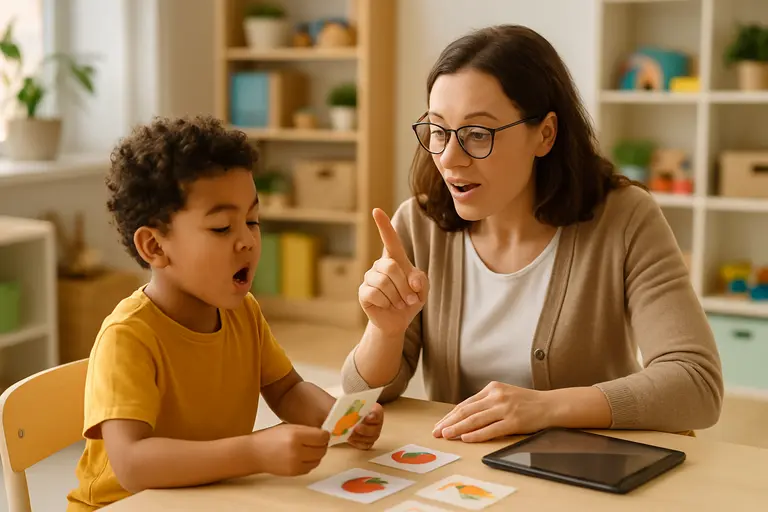
Good coaching should feel usable at home. A professional may model how to wait, how to expand a child’s phrase, how to arrange toys so the child has a reason to request, or how to reduce the number of adult questions during play. Parents should be able to ask, “Show me what this looks like during dinner,” or “How would I do this with both languages at home?”
If a strategy makes the child frustrated or turns every interaction into a demand, share that feedback. Support for speech development delays should increase communication, not reduce the child’s interest in interacting. The plan may need to be adjusted for temperament, sensory needs, family routines, and the child’s current way of communicating.
Addressing Speech Development Delays Post-Pandemic
Responding to speech development delays after the pandemic means combining patience with action. The research supports concern at a population level, but it does not support panic for every individual child. Parents can monitor milestones, seek screening when concerns continue, build more conversational turns into daily care, and work with professionals when a child needs more support.
The most helpful home practice is usually simple and repeated: talk with your child, not just to your child. Notice what they notice. Add words to their actions. Wait for a response. Accept gestures and sounds as communication while gently modeling clearer language. For bilingual families, keep using the languages that carry family connection, comfort, and daily meaning.
Children do not need perfect lessons to make progress. They need responsive people who keep communication useful, social, and emotionally safe. That is where parents can make a steady difference while evidence, screening, and professional support guide the next step.