For families comparing bilingual school options, One-Way Dual Language and transitional bilingual programs can sound similar at first. Both may use a child’s home language in school, and both are often discussed in relation to English learners or emergent bilingual students. The difference is in the goal, the length of support, and how the home language is treated across grades.
Because program names vary by state and district, families should ask how a local school defines its model rather than relying only on a brochure label. A program called “dual language,” “bilingual,” or “transitional” may look different depending on staffing, curriculum, language allocation, grade span, and assessment practices.
How One-Way Dual Language Differs From TBE
What One-Way Dual Language Aims To Build
In a One-Way Dual Language program, students who share a partner-language background learn academic content through both English and the partner language. The model is generally designed to support bilingualism, biliteracy, grade-level academic learning, and cross-language development over multiple years.
That long-term design matters. A child is not simply using Spanish, Vietnamese, Mandarin, Korean, or another home language as a short bridge to English. The home language remains part of instruction and academic growth. For many families, that goal aligns with maintaining communication with relatives, building reading and writing in both languages, and protecting the child’s ability to use the home language for more than everyday conversation.
What Transitional Bilingual Programs Aim To Do
Transitional bilingual education, often shortened to TBE, usually uses the child’s home language while the student is developing English. The long-term aim is often a shift toward English instruction. Some programs are early-exit models, while others extend home-language support longer before the transition is complete.
This does not mean TBE is automatically weak or harmful. A well-run transitional program may provide understandable instruction, emotional support, and a safer entry into English-medium schooling than a sudden English-only placement. The key question is whether the program also gives enough time and academic depth for the home language to keep growing.
What Recent Evidence Says About Student Growth
Findings From A Texas District Study
A Rice University Kinder Institute analysis published on May 18, 2026 examined students in Pasadena Independent School District in Texas. In that study, emergent bilingual students in OWDL outperformed peers in transitional bilingual education in reading, math, and academic readiness through first and second grade. The study also reported that TBE students scored higher in second-grade English proficiency Rice University Kinder Institute.
That pattern is useful but should be read carefully. The finding does not mean every child in every district will show the same profile. Program quality, teacher preparation, family language use, school resources, curriculum, and student background can all affect outcomes. The strongest takeaway is not that one label guarantees success, but that long-term bilingual instruction can be associated with strong academic growth when the program is implemented well.
Why English Scores Can Tell Only Part Of The Story
The Pasadena finding also illustrates a common tension in bilingual education decisions. If a TBE group shows a stronger English score at a particular grade level, that may look persuasive to families who are worried about English access. Yet English scores alone do not show whether the child is also developing reading, writing, vocabulary, and academic reasoning in the home language.
For young bilingual children, growth may not appear evenly across both languages at the same time. A child may answer faster in English at school while still needing steady chances to speak, listen, read, and write in the home language. Families who want practical home support during school changes may find related guidance on dual-language program support useful, especially if a child’s school language plan changes from one year to the next.
California Participation Data Shows Similar Choices
How Participation Was Reported In 2021–22
California data from the 2021–22 academic year showed that about 9% of English learner students participated in dual language immersion programs, while about 8.3% were in transitional bilingual or early-exit programs NCELA California data. These figures do not tell families which model is best for a specific child, but they show that both types of bilingual programming were present at meaningful scale.
The closeness of those percentages also reminds us that access is not only a family preference issue. A child’s options may depend on the district, neighborhood, language group, staffing, transportation, grade level, and whether seats are available. Some families may strongly prefer a long-term bilingual model but live in an area where only a transitional option is offered.
Questions Families Can Ask A School
Instead of asking only, “Is this a bilingual program?” families can ask more specific questions that reveal the actual design. Clear answers can help parents compare models without assuming that the same label means the same experience everywhere.
- How many years will my child receive instruction in the home language?
- Which subjects are taught in each language at each grade level?
- How does the school measure reading, writing, speaking, and listening in both languages?
- What happens if my child is stronger in one language than the other?
- How are families kept informed in a language they understand?
- What training do teachers receive for bilingual instruction?
Families comparing program explanations, school handouts, and visual materials may also benefit from clear presentation models used across education and communication sites, including Finest Image. This site offers tools and resources that can make educational information simpler to review and discuss. The goal is not to replace school guidance, but to make information easier to review and discuss.
How Program Design Affects Home Language Growth
Why Time In The Home Language Matters
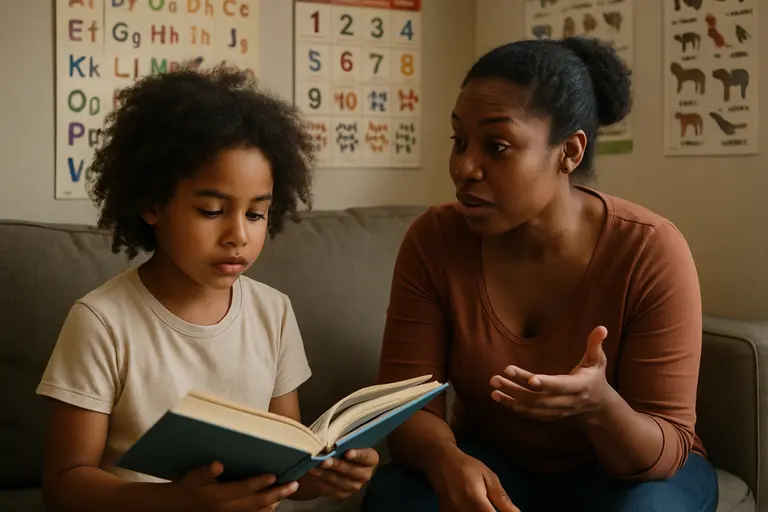
A bilingual child needs enough meaningful language experience to keep growing in each language. Short conversations at home can support family connection, but academic language often requires more: explanations, stories, problem-solving, subject vocabulary, reading, and writing. If school instruction quickly moves away from the home language, families may need to be more intentional about maintaining it outside school.
A One-Way Dual Language placement can give the home language a formal academic role for longer, but it still does not remove the need for family talk, books, songs, storytelling, and community language use. School and home support work best when they reinforce each other. A child who hears the home language only in brief commands may not build the same range of vocabulary as a child who also uses that language for stories, explanations, jokes, questions, and problem solving.
Why Transitional Support May Still Help Some Children
Transitional programs can offer a gentler start than immediate English-only instruction because the child can use a familiar language while learning school routines and new content. For some families, that support may be the best available option. The concern is not that transitional support has no value; the concern is whether it ends before the child has had enough time to develop strong academic skills in both languages.
Parents can watch for signs that language support is narrowing too quickly. For example, a child may stop bringing home books in the home language, avoid speaking it for school-related topics, or seem able to chat with relatives but unable to explain science, math, or stories in that language. Those patterns do not prove a program is failing, but they are worth discussing with teachers.
One-Way Dual Language Choices For Families
Choosing between OWDL and TBE is not only a question of which model has the stronger research profile. It is also a question of fit, availability, quality, and family goals. If a family wants biliteracy and long-term development in two languages, OWDL may be the better match when it is well implemented and accessible. If only a transitional program is available, parents can still ask for clear language goals and support the home language through daily routines.
Families should be cautious about any school or provider that promises a guaranteed result from a program label alone. The evidence available here supports careful comparison, not certainty. A strong bilingual program needs trained teachers, stable language planning, meaningful assessment in both languages, and communication with families.
The most useful decision is often the most specific one: ask what your child will hear, speak, read, and write in each language across the school day and across the grades. That answer tells you more than the program name by itself.