Raising a multilingual child can be tough. It’s like trying to put together IKEA furniture without instructions.
You dream of your child being smart and adaptable. But finding the right path is hard. There’s too much advice and apps that promise quick results. Sure.
Why is the right tools important? Science says it’s because a young brain is like a supercomputer. It’s learning fast.
Using bad tools is like trying to play a game on a slow internet. It doesn’t work well.
Studies show that the right tools are key. They help your child learn better and do well in school.
This guide helps you find the best tools. We sort out the good from the bad. You’ll learn how to pick language games and tools that really help.
The best time to start is now. The right tools make learning fun, not a hassle.
Top Rated Books & Apps
Finding the right language tools in the app store is tough. It’s like searching for quality in a sea of bright colors. Most apps are not designed for kids, focusing on adult learning instead.
So, how do you find the right apps? It’s about knowing your child’s age and needs. The goal is to make learning fun through play. Here’s a quick guide to help you:
| Age Group | App Champion | Why It Works |
|---|---|---|
| 2-6 Years | Gus on the Go | It’s interactive peek-a-boo with a linguistic twist. Simple, sensory, and shamelessly repetitive—exactly what a toddler’s brain craves. |
| 7-12 Years | Duolingo for Schools | Taps into the reward-seeking brain with gamification. The key is supervised use to avoid the “screen-time sinkhole.” |
| 13+ Years | Babbel Teen | Offers more conversational, real-world context. It respects the teen’s growing cognitive ability without being patronizing. |
But digital tools aren’t everything. Books are making a comeback. A bilingual picture book teaches language in a fun way. Graded readers build confidence, and young adult novels offer cultural depth.
Passive learning is also powerful. TV shows, podcasts, and music in the target language provide constant learning. It’s like having a language teacher always on.
The best tool might not be digital. A activity kit of bilingual games and crafts is often better. It engages senses and encourages real-world interaction. Your best support network includes creators who know how to make learning fun.
Activity Kits for All Ages
Let’s be honest. The phrase “activity kit” often means a box with a warning. But the best parent resources come from everyday life.
Think of it as a mindset, not a product. Your home is the kit. The goal is to create a “Language Ecosystem.” This isn’t about setting aside “Spanish hour.” It’s about linking languages to fun moments, like Italian and garlic.
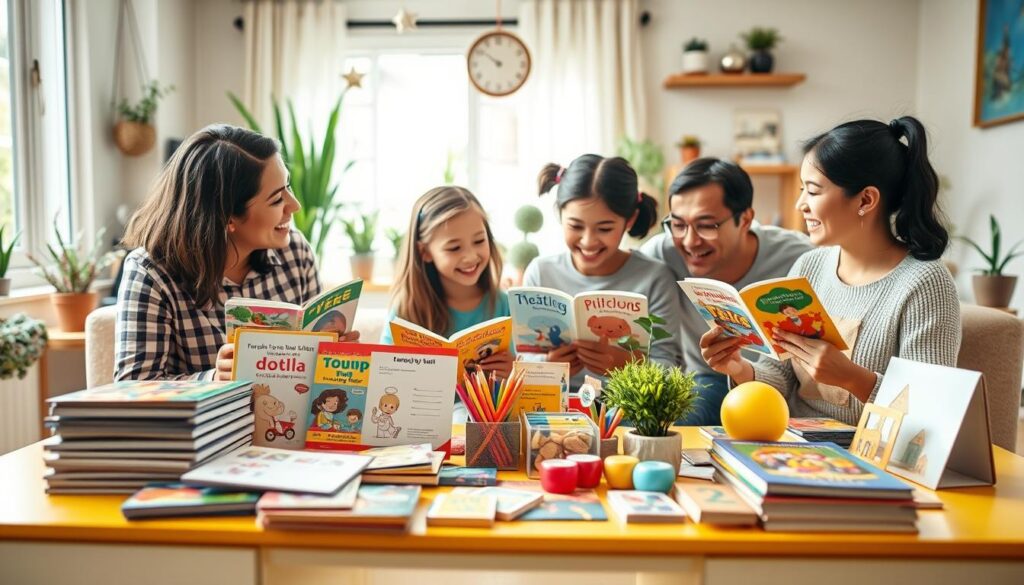
Forget just memorizing words. Studies show that fun, context-rich learning sticks. It’s the difference between learning “apple” from a card and picking one from a tree.
So, how do you build this ecosystem? Tailor your methods like a political strategist targets groups.
| Age Group | Core Strategy | Your “Kit” Ingredients | The Principle at Play |
|---|---|---|---|
| 0-3 Years | Immersive Sensory Play | Label household objects. Narrate diaper changes like a sportscaster. Turn bath time into a vocabulary splash zone with floating letters. | Language is absorbed, not studied. It’s ambient noise that becomes meaningful sound. |
| 4-7 Years | Educational & Cultural Games | Cook a simple recipe—”Gastronomy 101 in French.” Do crafts with instructional videos in the target language. Play “I Spy” with color and shape words. | Learning Through Play. You’re not making a papier-mâché globe; you’re kneading geography terms into their memory. |
| 8-12 Years | Gamified & Project-Based Missions | Start a bilingual comic strip. Engineer a pen-pal exchange. Use apps that turn grammar into a quest. Challenge them to dub a short cartoon clip. | Autonomy and challenge. This is DIY linguistics. They’re creators, not just consumers. |
| 13+ Years | Interest-Based Infiltration | They’re into K-pop? The language game is decoding lyrics. Gaming? Switch the server language to Spanish. Fashion? Follow designers who post in Mandarin. | Leverage existing passions. The language becomes a tool to access a cooler, deeper layer of their hobby. |
See the evolution? The kit changes from sensory overload to strategic use. For teens, the best parent resources are often permission and a credit card for foreign streaming services.
The magic of this approach is its subtlety. You’re not adding homework. You’re changing their world. One language might live in the kitchen with grandma. Another lives on the gaming console with friends overseas.
This creates “situational fluency.” They may not speak perfectly, but they’ll know all the slang. It’s real, messy, and alive. These language games build strong, colorful neural pathways tied to joy.
Your ultimate activity kit is a bilingual home. It’s a living lab where language isn’t a subject, but a lens for experiencing everything else.
Online & Community Support Groups
The digital age has made every smartphone a lifeline for lonely parents. You might feel like the last monolingual person on your block. But, help is just a click away.
Online communities are like modern-day town squares. They offer real-time help for every language problem. Non-native parents find their tribe here, sharing Duolingo streaks and determination.
These platforms are like 24/7 brainstorming sessions. Someone in Berlin shared a great hack for teaching gendered nouns. A parent in Texas is sharing activity kits for weekend language practice. You’re not just consuming content—you’re building collective intelligence.
But don’t forget the real world. Local bilingual playgroups are more than just fun. They’re where you meet others who understand your struggles. These face-to-face connections prove you’re not alone.
Technology helps bridge the gap between native and non-native speakers. Video calls with family members abroad offer authentic accent exposure. Virtual playgroups connect kids worldwide for story time. Online tutors help when your vocabulary is limited.
Community-driven learning models are everywhere. Bilingual book clubs and language exchange meetups are common. These groups make learning a lifestyle, not just homework.
The biggest change is empowering non-native parents. You don’t need perfect fluency to raise bilingual kids. Commitment, creativity, and community access are key. Your slightly-accented Spanish and an online tutor create a richer learning environment.
So, how do you find these groups? Start online but think local:
- Facebook: Search “[Your City] Bilingual Families” or specific language groups
- Meetup.com: Look for language exchange events or cultural gatherings
- Local Libraries: Many host bilingual story hours or parent resource meetings
- Cultural Organizations: Embassies, cultural centers, and heritage schools often have family programs
Your digital and IRL support networks are like an external hard drive for your bilingual project. They offer collective wisdom, accountability, and new ideas. In raising a mini-polyglot, your community is vital infrastructure.
Accessing Speech Professionals
Getting a formal assessment is key for bilingual parents. It turns vague worries into clear data. You’ve got parent resources and language games ready. But how do you know they’re working?
At some point, it’s wise to seek expert advice. This isn’t about giving up. It’s a smart move.
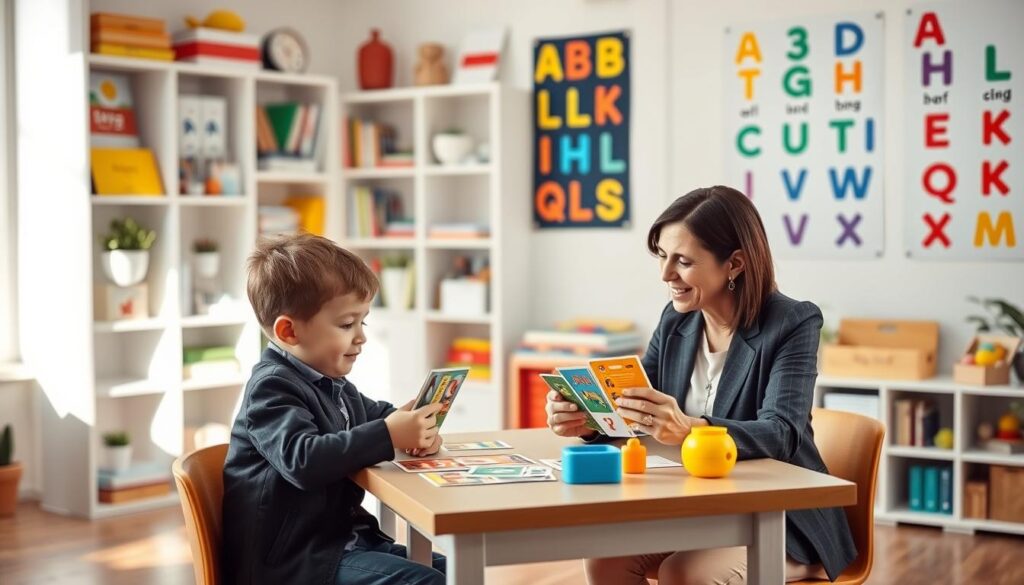
Think of a bilingual speech-language pathologist or tutor as a master mechanic for your child’s language skills. You might hear a slight knock. They can tell if it’s normal mixing or a grammar issue that needs fixing.
Their tools are not just for fixing things. They offer science-backed insights into what’s normal for your child’s age.
When to Consider the Professional Route
There are a few reasons your internal alarm might go off. Maybe your DIY efforts have plateaued. Or your child’s interest in your language games is waning. Or you’re unsure if their progress matches their ability.
Formal settings offer what home parent resources can’t: deep, systematic instruction. This is where bilingual immersion programs excel.
These programs are more than classrooms. They are linguistic ecosystems designed for fluency. They provide the consistent, structured exposure that research supports.
The Toolkit: From Assessments to Immersion
Professionals help you move beyond guessing. They use specific tools to track your child’s progress.
- Standardized Proficiency Tests: Exams like the DELE (Spanish) or DELF (French) for young learners are not about stress. They are clear benchmarks. They show where your child stands globally.
- School & Clinical Evaluations: These look at everything. They check vocabulary, pronunciation, comprehension, and social language use. They help separate normal phases from possible delays.
- Bilingual Education Programs: Enrolling in a quality immersion program is like hiring experts. You’re letting them handle the curriculum, making sure your child learns bilingualism well.
The goal is to understand clearly. A good assessment turns “He doesn’t seem to get the past tense” into “He’s mastering present tense, which is typical for his age, and here’s how we gently introduce the next step.”
Below is a breakdown of common professional avenues. It shows how each supports your home efforts.
| Professional Resource | Primary Focus | Best For | How It Complements Home Play |
|---|---|---|---|
| Bilingual Speech-Language Pathologist | Diagnosis & therapy for speech delays, pronunciation, language disorders in a bilingual context. | Addressing specific concerns, ensuring mixing isn’t a sign of confusion. | Provides targeted exercises that you can weave into your daily language games. |
| Certified Bilingual Tutor / Educator | Academic language skills, literacy, formal grammar instruction in the target language. | Boosting school performance, building reading/writing proficiency. | Structures the learning that your casual parent resources initiate, adding rigor. |
| Language Immersion School Program | Comprehensive acquisition through curriculum-based, all-day exposure in the target language. | Families seeking systemic, high-fluency outcomes and a peer community. | Becomes the primary engine of acquisition; home activities then reinforce and enrich. |
| Proficiency Testing Center | Objective measurement of listening, reading, writing, speaking skills against international standards. | Benchmarking progress, preparing for academic placements, validating learning. | Gives concrete data on the effectiveness of your overall strategy, including your chosen parent resources. |
Using these experts isn’t admitting defeat. It’s a smart move. You’re the manager of your child’s bilingual journey. You draft the talent (books, apps, games) and create the culture (home language use).
Sometimes, you need a specialist coach for the complex drills. That’s the professional’s role. They provide the roadmap so your family’s journey is confident, not cluttered with doubt.
Case Stories
Let’s look at real-life examples from the bilingual world. Theory is clean, but real life is messy and funny. We’ll see how it feels in practice.
The OPOL (One Parent, One Language) method is a classic. Mom speaks English, Dad speaks French. This creates clear language boundaries for the child. But, Dad might feel like he’s alone with French at English-dominated places.
Having support networks is key. Finding other French-speaking families can make Dad’s job easier.
The ML@H (Minority Language at Home) approach is another example. A Spanish-speaking family in the U.S. speaks only Spanish at home. This protects their heritage language.
But, the kids might struggle in English-only kindergarten. It’s tough, but it’s temporary. Our strategies need to be strong and flexible.
A parent shared a digital diary entry. Their 9-year-old is learning Spanish on an app, but it’s hard. We need to choose tools that are easy for kids, not just parents.
Code-switching is when kids mix languages in one sentence. It’s not confusion; it’s a sign of cognitive agility. Kids are using their linguistic skills wisely.
What do these stories teach us?
- There is no universal blueprint. Each family’s culture, context, and child’s personality are unique.
- Methods like OPOL and ML@H offer structure. But, support networks like playgroups and communities are essential.
- The best activity kits and resources respect the child’s emotional and cognitive journey.
- The “mess” of mixing languages shows success.
Bilingual parenting is about navigating through unpredictable and wonderful terrain with love and skill.
Staying Informed: Latest Research
Let’s be honest. The best parent resources aren’t just flashy apps or colorful books. They are ideas. To arm yourself properly, you must occasionally put down the toys and pick up the journal. The latest cognitive science is your intellectual shield against parenting folklore.
Think of it this way. Knowing the physics behind a curveball doesn’t ruin the game of catch—it makes you a better coach. The same goes for raising a bilingual brain.
For decades, we were told code-switching—mixing languages in one sentence—was a sign of confusion. Then Ellen Bialystok and her colleagues showed us the truth. It’s a cognitive flex, a sign of a nimble brain managing two linguistic systems with ease. Your child isn’t failing. They’re performing advanced mental gymnastics.
Then there’s the famous “Critical Period Hypothesis.” Eric Lenneberg’s idea that language learning has a biological deadline has haunted parents for years. But modern research, like Elissa Newport’s work, reframes it. It’s not a cliff, but a gentle slope of declining neural plasticity. Earlier is easier, but it’s never too late. The window is more of a sliding glass door.
Patricia Kuhl’s research is the real mic-drop. Babies are born as statistical geniuses, analyzing the sound patterns of every language they hear. They’re building the neural architecture for speech before they can even hold their head up. This tells you one thing: exposure matters, but quality and emotional connection matter more. Depth beats fleeting exposure every time. This is why you pair lessons with love and your favorite language games.
| Research Concept | Key Researchers | The Big Insight | Practical Takeaway for Parents |
|---|---|---|---|
| Code-Switching | Bialystok, Poplack, Genesee | It’s a sign of advanced bilingual proficiency, not confusion. | Don’t correct mixed sentences. Celebrate the linguistic dexterity. |
| Critical Period Hypothesis | Lenneberg, Newport | Neural plasticity for language declines with age but never vanishes. | Start early for ease, but start now regardless. The brain remains adaptable. |
| Infant Sound Statistics | Kuhl | Babies unconsciously compute sound probabilities to map language. | Prioritize rich, interactive talk over background noise. Your voice is the primary data source. |
| Emotional Memory & Retention | (Various Neuroscience Studies) | Information paired with positive emotion is encoded more deeply in memory. | Make language learning fun. Laughter and play are not distractions; they are the glue. |
This table isn’t just academic name-dropping. It’s a cheat sheet. Understanding that emotional connection solidifies memory tells you to choose engaging activity kits over dry flashcards. Knowing that depth of exposure wins tells you to opt for immersive experiences over sporadic app checks.
Staying informed transforms good parent resources into great ones. You’re not just following a trend. You’re applying the bedrock principles of how the human brain acquires language. You move from guessing to guiding. So, geek out a little. Let that knowledge confidently infuse your language games and daily routines. You’re not just a parent. You’re a cognitive architect.
Conclusion
So, where does our journey end? We’ve explored apps and activity kits that make learning fun. We’ve also found digital and physical places where parents share tips. The tools are ready.
Your best resource isn’t just a product. It’s a way of thinking. It’s about picking tools that make learning exciting, not just a chore. It’s creating a home where languages are part of everyday life, not just lessons.
Every family’s path is unique. Whether you’re keeping a language alive or introducing a new one, be consistent and patient. For those looking at formal programs, IDRA’s parent guide is a great resource.
Your journey is long-term, filled with ups and downs. It’s about the small wins, like mastering a new word or having a first conversation. The research supports you, and so does the community. Now, go out there and explore language in your own way.