Imagine a world where a simple journey across the living room floor becomes an epic adventure. With a few toy cars, some makeshift roads, and a cardboard ramp, children embark on a hands-on exploration. This goes far beyond just pushing vehicles around.
This interactive activity is a powerful tool for learning. Kids naturally begin to understand concepts like left, right, and forward. They start to plan routes and create simple narratives about where their vehicles are going and why.
The benefits are incredible. This type of hands-on learning sparks creativity and problem-solving. It builds spatial awareness as children visualize paths and obstacles. It also fosters language development through storytelling about their car’s adventures.
For parents and educators, it’s a wonderful way to blend fun with real educational outcomes. Turning playtime into a lesson about directions and sequences is both easy and highly effective.
Building a simple city mat with roads and destinations
Let’s start making a DIY city mat that will be the heart of endless play. This project is not just about crafting; it’s a chance to learn about design and thinking spatially. You don’t need to be skilled in art or engineering to create a fun world for toy cars.
You and your child will work together to design roads, intersections, and key spots. This teamwork boosts communication and sparks creativity. The mat will become a real map for planning routes and adventures.
The first exciting step is gathering your supplies. You probably have most of what you need at home:
- A large base: poster board, an old sheet, or brown wrapping paper.
- Drawing tools: markers, crayons, or paint.
- Colored tape or stickers for road lines.
- Small boxes or blocks to create buildings.
Here’s how to bring your city to life:
- Plan Your Layout: Discuss with your child what their city needs. Sketch light pencil lines for main roads, intersections, and key places.
- Build the Roads: Use gray markers or tape to create streets. Make some roads curvy and others straight for variety.
- Add Destinations: Draw or label buildings like a house, school, fire station, park, and grocery store. This turns the mat into a real-world map.
- Personalize It: Let your child add details like trees, a river, or a parking lot. This is where their imagination takes over.
To make your play mat last through many adventures, consider these tips. Use a sturdy base like foam board or canvas. Laminate the paper or use a clear vinyl tablecloth over your design. This lets you draw with dry-erase markers and change the city anytime.
Choosing the right base material can make your mat more versatile. The table below compares popular options to help you decide.
| Material | Best For | Durability | Adaptability |
|---|---|---|---|
| Poster Paper | Quick, one-time projects | Low | Draw once, can’t change |
| Fabric (Old Sheet) | Soft, foldable play surface | Medium | Can be redrawn if using fabric markers |
| Vinyl Tablecloth | Reusable, wipe-clean surface | High | Use dry-erase markers for endless changes |
| Foam Board | Sturdy, long-term play | Very High | Permanent drawing, but very robust |
Remember, perfection is not the goal. A simple, hand-drawn city is incredibly engaging. It invites your child to navigate their toy cars from the school to the park, practicing direction and storytelling. This adaptable play setup grows with your child, teaching early map reading and planning skills in the most fun way possible.
Direction language: left/right/straight/turn/stop/go/near/far
Learning about left and right can be as exciting as racing a toy car. These words help us understand prepositions and location. Using them in play makes learning fun and effective.
Begin with simple commands. Tell your child to drive straight or turn right. This makes them connect words with actions. It’s a fun way to learn.
Try a “Delivery Game” to practice. Give your child a mission. For example, say, “Go to the blue pillow, stop, then turn left to find the stuffed animal.” This game uses many direction words in a fun way.
Learning about near and far is easy with toy cars. Place two cars on your mat. Ask, “Which car is near the book? Which one is far from the tree?” Move the cars and ask again. This makes abstract ideas clear.
Here’s a quick guide on using these words:
| Direction Word | Example Command | Spatial Concept Taught |
|---|---|---|
| Left / Right | “Turn left at the bridge.” | Relative direction |
| Straight | “Go straight for three seconds.” | Continuation of path |
| Stop / Go | “Stop at the finish line!” | Motion control |
| Near / Far | “Park near the garage.” | Proximity and distance |
Keep it fun and encouraging. If your child gets left and right mixed up, show them the right way. The goal is to have fun and learn, not to be perfect. This playful learning helps with following instructions and understanding maps.
Every time your child plays with their toy car, you’re teaching them. By using these direction words in play, you help them describe their world. This basic knowledge of prepositions is key for early math and reading skills.
Mission sequences: pick up → deliver → park → refuel → repair
Mission-based play teaches kids to plan and execute tasks. They learn to follow a chain of commands. This builds sequential thinking, where each action leads to the next.
Creating a clear mission gives play a purpose. It turns random zooming into a story with a start, middle, and end. This is where problem and solution learning starts.
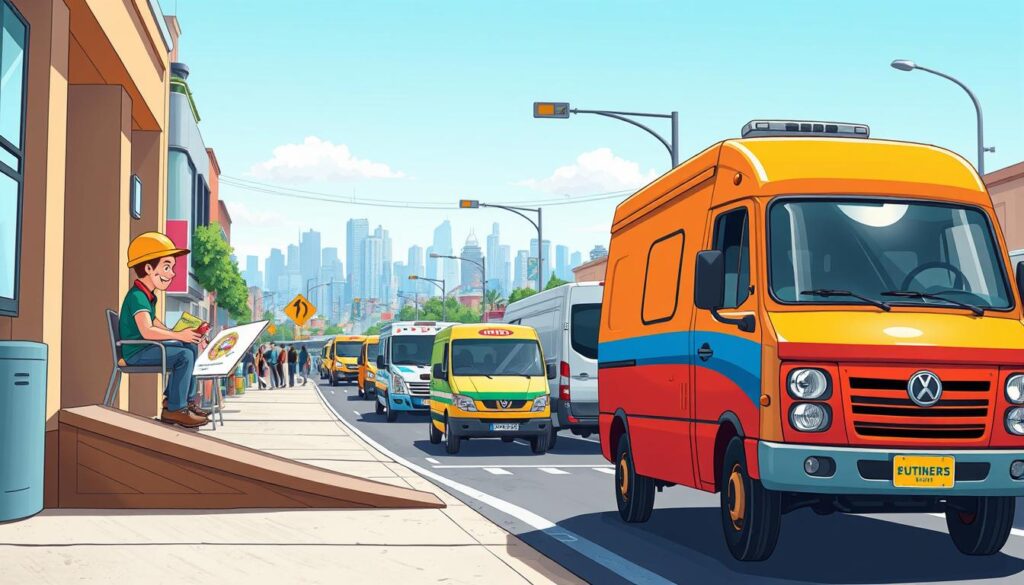
Let’s break down a classic mission sequence. You can give your child verbal instructions or use simple picture cards.
- Pick Up: “The mail truck needs to pick up letters at the post office.”
- Deliver: “Now, drive the letters to the blue house on Maple Street.”
- Park: “After delivering, the truck must park in the lot behind the building.”
- Refuel: “Oh no, the fuel is low! Drive to the gas station to fill up.”
- Repair: “A tire looks flat. Take the truck to the repair shop before the next trip.”
Each step presents a small challenge. Running out of gas or getting a flat tire is a problem that needs a solution. This teaches resilience and critical thinking in a fun way.
Start simple and add layers as your child’s skills grow. The table below shows how to scale the challenge.
| Mission Type | Sequence Steps | Core Problem/Solution Challenge |
|---|---|---|
| Simple Delivery | Pick Up → Deliver | Finding the correct destination. |
| Extended Errand | Pick Up → Deliver → Park | Managing space and order of operations. |
| Complex Adventure | Pick Up → Deliver (Obstacle!) → Refuel → Repair → Park | Adapting to unexpected problems and finding multiple solutions. |
To create your own engaging missions, think about everyday routines. A garbage truck collects trash, a delivery van brings packages, or a firetruck races to an emergency. Introduce obstacles like a “road closed” sign or a “bridge is out” scenario. Ask your child, “What should we do now?” This prompts them to brainstorm a creative solution.
This process of encountering and overcoming hurdles is central to developing problem-solving skills. When a toy car “breaks down,” the child must diagnose the issue and take it to the “mechanic.” This simple act reinforces cause and effect.
Encourage your young driver to explain their plan before they start rolling. Saying the sequence out loud solidifies their understanding. Celebrate when they successfully troubleshoot an issue! This positive reinforcement builds perseverance, showing them that sticking with a plan leads to accomplishment.
By framing play around these mission sequences, you provide a safe space for trial and error. Every detour and repair is a chance to learn. Watch as your child gains confidence in tackling challenges, one playful delivery at a time.
STEM ramp challenges with predict/observe/compare language
Watching a toy car race down a ramp is more than fun. It’s a lesson in cause and effect, measurement, and science. It turns your living room into a lab where kids test ideas and see results right away.
Exploring measurement becomes fun with activities like the one from preschoolvibes.com. Kids pick their favorite cars and race them down a ramp. They mark the distance with colorful sticky notes.
This setup is great for learning. It helps kids follow the scientific process. They predict which car will go far, observe the race, and compare the results.
Changing variables makes it even more exciting. Ask, “What if we make the ramp steeper?” or “Let’s add blocks to this car?” Each change is a new experiment in cause and effect. Kids learn that a steeper ramp makes cars roll farther, and a heavier car might not go as far.
This play builds important STEM skills. Kids learn to measure by comparing sticky notes. They understand force and motion. They also improve their language skills by describing what they see.
Using “predict, observe, compare” language helps kids think like scientists. It turns play into discovery. This approach shows the power of play in learning and growing.
For more learning, check out structured ramp-building lessons. The idea is simple: let kids explore and discover. Every ramp challenge is a chance to ask “what if?” and enjoy the answer.
Travel Storylines: Tickets, Delays, Detours (Problem/Solution)
Imagine a play session where a simple delivery mission suddenly faces a roadblock, teaching kids to think on their feet. Travel storylines add a layer of exciting unpredictability to vehicle play. They turn a basic trip from point A to point B into a dynamic adventure filled with solvable puzzles.
Introduce elements like paper tickets for passage, imaginary traffic jams, or a washed-out bridge. These events create a natural problem for your young driver to solve. The goal isn’t to avoid the hiccup but to engage with it. How do we get the fire truck to the park if the main road is closed? This question sparks immediate, creative thinking.
This is where maps become the essential tool for planning and adaptation. Before the toy car even rolls, children can trace their intended route. When a “delay” is announced, they return to their maps to scout a new path. This practice reinforces spatial reasoning and introduces basic logistics.
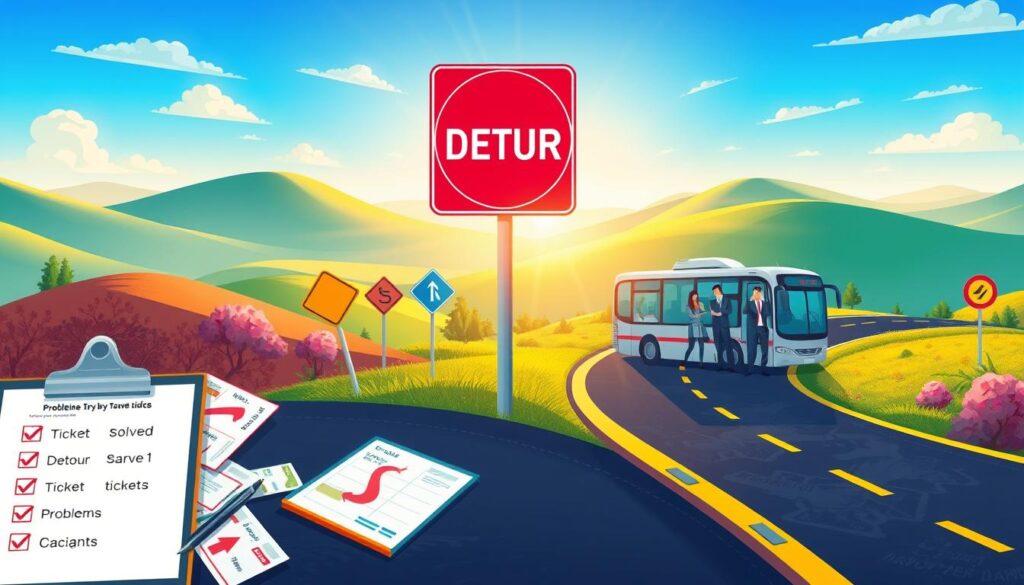
Here’s a simple storyline example to try. The mission is to deliver a package from the toy store to the library. Give your child a hand-drawn map of your play mat city. Halfway there, announce a “detour” because of construction. Encourage them to find two different alternative routes on their map. Discuss which one is faster or which one passes the gas station for a quick refuel. This activity makes the solution-finding process tangible and fun.
The real magic of these storylines is the life skill they build: resilience. Kids learn that plans can change and that’s okay. They practice staying calm and using available tools—like their trusty map—to find a new way forward. This type of play strengthens imaginative thinking as they narrate the reasons for the delay and the triumph of the workaround.
Encourage this narrative play by asking open-ended questions. “Oh no, the ferry isn’t running! How will the car get across the river?” Or, “The bus is running late and the passengers are waiting. What should we do?” Your role is to present the problem and cheer on the solution. Every detour navigated is a small victory in critical thinking and adaptability, turning playtime into a powerful learning adventure.
Cooperative roles for siblings and friends
Assigning roles in vehicle play turns rivalry into teamwork. When everyone has a job, playtime with toy cars becomes a team effort. This helps kids practice communication, sharing, and problem-solving in a fun way.
Clear roles give each child a sense of purpose and responsibility. This structure reduces conflicts over who controls the cars or the road mat. Instead of arguing, kids focus on their missions.
- Driver: Operates the vehicle, follows directions, and announces actions like “stopping at the gas station.”
- Navigator: Holds the map (real or drawn), gives directions using left/right, and plans the route to destinations.
- Traffic Controller: Manages intersections with stop/go signals, creates detours, and ensures safe travel for all cars.
- Mechanic: Handles “repairs” and “refueling,” using blocks or tools to fix imaginary breakdowns.
To see how these roles work together, check out the comparison below.
| Role | Primary Task | Key Skill Developed |
|---|---|---|
| Driver | Steering the car and following navigation commands. | Listening and fine motor control. |
| Navigator | Reading the map and calling out turns. | Spatial reasoning and clear communication. |
| Traffic Controller | Directing the flow of vehicles at busy points. | Leadership and rule enforcement. |
| Mechanic | Performing pretend maintenance and fuel stops. | Problem-solving and imaginative repair. |
Try a role-playing scenario like “The Great Delivery Mission.” The navigator plots a course to pick up a package (a block). The driver follows the path. The traffic controller manages a busy bridge crossing. The mechanic performs a quick tire check before parking. Kids can swap roles after each completed mission to experience different jobs.
This cooperative framework builds essential social skills. Children learn to share tools and space. They must communicate their plans and needs clearly. Most importantly, they experience the success of working as a team to reach a common goal.
Encourage friends and siblings to take on these roles together. This inclusive play makes every child feel valued. It transforms simple play with toy cars into a powerful lesson in cooperation and friendship.
Bilingual signs and symbol packs
Introducing bilingual signs and symbol packs to your play mats opens up a world of language diversity. Simple stop signs in English and Spanish, or symbols for a hospital or library, become tools for early literacy. Children start to recognize that meaning can be shared in different ways.
This layer of play builds cultural awareness. Kids learn that communities use various languages and symbols on real maps and street signs. It turns a basic play mat into a more authentic and inclusive landscape for imaginative journeys.
Printable resources extend this learning. Download packs with destination cards, traffic signs, and mission maps. Laminate these items for durability. Children can place the signs along their cardboard roads, creating new challenges for their delivery missions.
These elements make direction-based play richer. A child following a paper map might need to interpret a symbol to find the park. Friends working together can assign roles using bilingual tickets. This playful exposure fosters a genuine curiosity for languages and how we navigate the world.