Watching your little one learn to communicate is a journey filled with wonder. Developmental milestones serve as valuable guides for observation. They are indicators of healthy growth, not a rigid checklist for every child.
Every child is unique. The pace of language development exhibits a wide range of standards. This natural variability means two children the same age may be at different points in their communication skills.
This guide embraces that spectrum. Our goal is to share knowledge and empower you with insight, not anxiety. Think of these ranges as a map for your child’s individual path, helping you notice progress and know when to seek support.
Typical Ranges 12–36 Months (Sounds, Words, Phrases, Play + Gestures)
Understanding the typical developmental range for toddler communication helps caregivers celebrate progress and identify areas for support. From a child’s first birthday to their third, you’ll witness a remarkable transformation in how they connect with the world. This journey follows a predictable sequence, though the exact timing varies for every child.
Let’s break down what to expect across four key areas: speech sounds, vocabulary, sentence building, and nonverbal communication.
Speech Sounds & Clarity
Early words are often approximations. Clarity improves gradually as a toddler’s mouth muscles develop and they practice new sound combinations. Don’t expect perfect pronunciation.
- 12-18 Months: Uses a variety of consonant and vowel sounds in babbling. First words may omit beginning or ending sounds (e.g., “ba” for ball).
- 18-24 Months: Speech is about 50% understandable to familiar listeners. Masters sounds like /p/, /b/, /m/, /n/, /d/.
- 24-36 Months: Strangers can understand about 75% of speech. Starts using more complex sounds like /k/, /g/, /f/, /t/, /ng/.
Vocabulary Explosion
Word learning starts slowly, then takes off. A child’s first words are usually labels for important people, objects, or actions in their daily life.
- By 12 Months: Has 1-3 meaningful words beyond “mama/dada.”
- By 18 Months: Says 10-20 words. They understand many more.
- By 24 Months: Has a vocabulary spurt, learning new words almost daily. Uses at least 50 words.
- By 36 Months: Knows and uses several hundred words, including action verbs, adjectives, and location words.
From Words to Sentences
Combining words is a major cognitive leap. It shows a toddler is learning grammar and can express more complex ideas.
- 18-24 Months: Begins putting two words together. These are telegraphic phrases like “more milk,” “daddy go,” or “my toy.”
- 24-30 Months: Uses three-word sentences and starts adding grammatical elements, such as “-ing” (running) or simple plurals.
- 30-36 Months: Regularly uses three- to four-word sentences. Begins asking simple questions (“Where kitty?”) and using pronouns like “I,” “me,” and “you.”
The Power of Play & Gestures
Communication isn’t just talking. Play and gestures are foundational language skills. They show a child’s intent to share ideas and engage socially.
- Key Gestures: Pointing to request or show interest, waving “hi/bye,” shaking head “no,” nodding “yes,” raising arms to be picked up.
- Play Development: Progresses from simple manipulation (banging toys) to functional play (drinking from a toy cup) and early pretend play (feeding a doll). Pretend play is closely linked to language growth.
- Joint Attention: This is the shared focus on an object or event with another person. It’s the bedrock of learning new words and having conversations.
| Age Range | Speech & Sounds | Words & Vocabulary | Phrases & Play |
|---|---|---|---|
| 12-18 Months | Varied babbling; first word approximations | 1-20 words; understands simple commands | Uses gestures like pointing; functional play |
| 18-24 Months | ~50% intelligible; uses /p/, /b/, /m/ | 50+ words; vocabulary spurt begins | Two-word phrases; early pretend play emerges |
| 24-36 Months | ~75% intelligible; masters more consonants | Several hundred words | 3-4 word sentences; complex pretend play |
Remember, this table outlines a developmental range. Some children will be at the early end of a range, others at the later end. Observing the overall progression is more important than hitting a single milestone on a specific date. These toddler speech milestones provide a map for the incredible journey of the next two years.
Variability by temperament, bilingual homes, prematurity, neurodiversity
Children learn to walk at different times, and talking is no different. The developmental range for learning to talk is wide and normal. Your child’s pace is unique and not a failure.
Many factors can influence how fast a child learns to talk. Knowing these helps you understand their progress better.
- Innate Temperament: Some kids are naturally quiet and may take longer to speak. Others might start talking sooner. Both are okay.
- Bilingual or Multilingual Homes: Kids learning two languages might mix words or seem to have fewer words. This is normal and not a delay. They’re actually building two language systems.
- Prematurity (Adjusted Age): Babies born early have milestones measured from their due date. This means a premature baby is compared to a child three months older. It’s important for a fair assessment.
- Neurodiversity: Kids with neurodiverse conditions, like autism, might develop language differently. They might focus more on using words for social interaction and play.
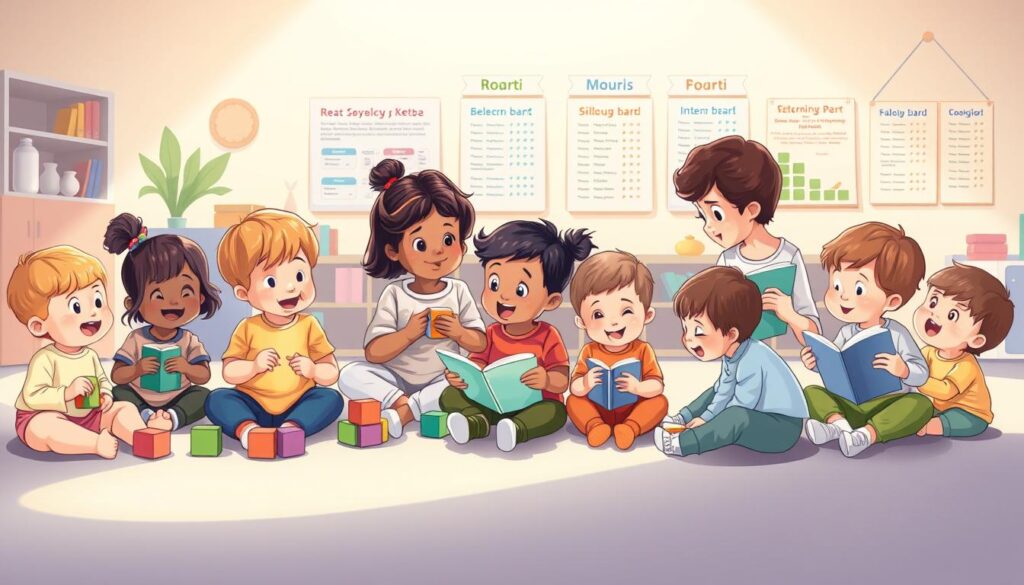
When is a slower pace a late talker concern? It’s when a child is far behind their age and adjusted age. Also, if they show little gestures or social interaction.
Understanding these factors can turn worry into a chance to observe and appreciate your child’s journey. It also helps you know when to seek professional advice.
Red Flags That Merit a Screen
Some signs, like not responding to sound, mean it’s time for a hearing test. It’s not about labeling a child. It’s about getting them the right help. Knowing when to ask for a professional’s opinion is key.
Early tests can find problems like hearing loss. They can also connect families with help early on. This helps support each child’s own way of communicating.
Signs of Possible Hearing Loss
Hearing is key for learning to speak. Some signs need a doctor or audiologist’s check.
- An infant doesn’t startle to loud sounds or turn to a familiar voice.
- A baby doesn’t babble by 9 months.
- A toddler doesn’t respond when called from another room.
Ear infections can also affect hearing. If a child seems to ignore sounds or has unclear speech, a hearing test is important.
Loss of words or social skills is a big warning sign. If a child used words like “mama” or “more” but then stops for weeks, pay attention.
Regression can happen due to stress or life changes. But losing many skills means a child needs a developmental screen. This is true for a late talker who seems to be going backward.
Limited Joint Attention
Joint attention is focusing on something with someone else. It’s important for learning language.
Signs of limited joint attention include:
- Not following a parent’s pointing finger to look at an airplane.
- Not bringing a toy to show someone.
- Limited back-and-forth sharing of sounds, smiles, or other expressions.
When a child rarely shares moments like these, it can affect their learning of words.
| Age Group | Key Red Flags | Recommended Action |
|---|---|---|
| Infant (0-12 months) | No response to sounds, no babbling by 9 months, absence of gestures like pointing. | Discuss with pediatrician; request a hearing evaluation. |
| Toddler (12-36 months) | Fewer than 25 words by age 2, no two-word phrases by 24 months, speech is very unclear. A possible late talker profile. | Seek an early intervention evaluation or speech-language pathologist (SLP) screening. |
| Preschooler (3-5 years) | Persistent sound errors, stuttering that causes frustration, difficulty playing with peers or following simple stories. | Consult with an SLP for a detailed speech and language assessment. |
Seeing a red flag doesn’t mean a child has a problem. It means a professional test can help. This step is a positive way to gather information.
It makes sure every child gets the support they need. This approach is about understanding and helping each child in their own way. It’s about using this knowledge to help and support them.
Home routines that help: imitate–expand–recast, wait time, visual models
Turning daily moments into chances to learn language is key for toddlers. You don’t need special toys or extra time. Just use everyday activities like mealtime, bath time, and play.
This hands-on method makes you your child’s best teacher. It’s a core idea in Individualized Family Service Plans (IFSP). Here are three techniques backed by research that you can start today.

This three-step method is a game-changer for vocabulary and grammar. First, imitate your child’s correct words or sounds to show you’re listening. If they say “car,” you say “car!”
Next, expand by adding one or two words. You might say, “Yes, a red car!” or “The car goes vroom!”
Then, recast their attempt into a full, correct sentence. If they say “Daddy go,” you can say, “Daddy is going to work.” This enriches language naturally, during reading or play.
Harnessing the Power of Purposeful Wait Time
After you ask a question or make a comment, be okay with silence. Count to ten in your head. This quiet time lets your toddler process and respond.
Don’t fill the silence or answer for them. Your patience shows you’re listening and expect them to talk. This makes talking more fun and encourages them to start conversations.
Using Visual Models and Schedules
Pictures and simple charts help toddlers understand and express ideas. A visual schedule with photos of “brush teeth,” “get dressed,” and “eat breakfast” helps them know what’s next.
This reduces anxiety during transitions. You can also use a choice board with pictures of a banana and an apple to let them choose their snack.
These tools make routines predictable. They also give your child a way to communicate without words, easing frustration and encouraging more talking.
Using these strategies in your daily routine makes you a key partner in your child’s language journey. Consistent, playful practice in everyday routines is often the most effective way to reach those exciting toddler speech milestones.
Sensory-friendly tips (noise, seating, transitions)
Making small changes to noise, seating, and daily routines can help toddlers. Many kids have special ways they like to feel and focus. When they feel calm, they can learn and try new things better.
These tips help create a space where kids can grow their communication skills. They respect each child’s unique needs. This is important for tracking inclusive milestones.
Too much noise can be hard for toddlers to handle. It makes it tough for them to listen and speak. Here are some ways to make the environment quieter.
- Find and turn down the hum of appliances, TVs, or fans.
- Use rugs, curtains, or soft things to make rooms less echoey.
- Make a “quiet corner” with pillows and books for kids to relax.
Try to keep the sounds softer during play or reading. This makes it easier for kids to hear you.
Offering Supportive Seating Options
Being physically comfortable helps kids focus. If they squirm or slouch, they might not be comfortable.
Give them more than just a chair. A small cushion, beanbag, or low bench can be better. Some kids like to move a bit while sitting.
Think about a light wobble cushion or a therapy ball for them to sit on. It’s about finding what makes them feel secure and ready to listen.
Using Visual Supports for Transitions
Changing activities can upset kids. It can stop them from wanting to talk.
Visual aids make time clear. They help kids get ready for what’s next.
- Use a simple picture schedule for daily events.
- Try a visual timer to show how much time is left for play.
- Make a “first-then” board (e.g., “first clean up, then snack”).
These tools help kids feel less anxious. They make it easier for them to know what’s coming. This means they have more energy for good interactions.
Even one of these sensory-friendly tips can make a big difference. It shows respect for each child’s brain. This helps them grow their communication skills in any developmental range. It makes tracking progress a positive experience for everyone.
Data sheet: 4‑week milestone tracker (download)
A dedicated tracking sheet can be very helpful for caregivers. It turns random thoughts into clear, useful data.
Worry often comes from not knowing what’s happening. This tracker helps you go from feeling unsure to seeing real patterns. You track your child’s communication over a month.
This way is better than trying to remember random moments. It gives you a clear picture of your child’s development based on daily life.
The downloadable 4-week tracker helps you consistently note:
- New sounds, syllables, or word approximations heard.
- Specific words used meaningfully, even if pronunciation is evolving.
- Attempts at combining words into short phrases.
- Gestures, eye contact, and responses during play and routines.
The tracker looks at inclusive milestones. It encourages you to observe without judging, respecting each child’s unique pace and path.
Your notes become important data. They show progress, plateaus, or patterns you might miss. This information is valuable when talking to your pediatrician or a speech-language pathologist.
A quick 3-minute preliminary screener gives a helpful snapshot. But this tracker shows trends. It’s like the difference between a single photo and a short film of your child’s toddler speech milestones.
Using this tool makes you an active, informed advocate. You’re not just waiting and seeing. You’re gathering evidence to support your child.
Download the tracker and start your 4-week journey of mindful observation today. It’s your first step toward turning observation into understanding.
When and how to contact an SLP/early‑intervention; what to expect at an evaluation
A speech evaluation is not a judgment, but a team effort to understand your child’s communication. If you’re worried about your toddler’s speech, knowing what to do next can help a lot.
When to Move Beyond “Wait and See”
Many parents are told to “wait and see” if their child is slow to talk. But, if your child’s delays last, it’s time to act. Look for signs like few sounds, little gestures, or trouble following simple directions by age two.
Trust your instincts. If something feels off, it’s okay to seek help. Early help can start as early as six months, so don’t wait too long.
Start by talking to your child’s pediatrician. Share what you’ve noticed and ask for a referral to a speech-language pathologist (SLP) or early intervention.
You can also reach out to early intervention directly. In the U.S., these services are part of the public system under the Individuals with Disabilities Education Act (IDEA). Just search online for “[Your State] early intervention referral” to find how to get in touch.
What Happens During the Evaluation?
The first step is to understand your child’s strengths and needs. This usually includes:
- A Detailed Parent Interview: The SLP will ask about your child’s health, daily life, and your concerns. Your input is very important.
- Play-Based Observation: The SLP will play with your child to see how they communicate, use gestures, and follow instructions.
- Standardized Tests: These are fun activities that check if your child is meeting language milestones.
The evaluation is designed to be friendly and stress-free. It’s all about seeing your child’s natural abilities, not making them perform.
Understanding the Outcomes
After the evaluation, the SLP will share their findings with you. If your child needs help, you’ll work on creating an Individualized Family Service Plan (IFSP).
An IFSP is a plan that outlines your child’s goals, the services they’ll get, and how your family will be supported. It’s a team effort, with you playing a key role. For late talkers, therapy might focus on building vocabulary, using gestures, or improving social skills through play.
The SLP will create a treatment plan just for your child. This plan is flexible and changes as your child grows and improves.
Seeking help from an SLP or early intervention shows you care deeply about your child’s future. It offers a clear path forward, turning uncertainty into a plan for your child’s communication success.
Caregiver FAQs + trustworthy resources
Many caregivers have questions after learning about toddler speech milestones. It’s important to know the typical developmental range. A child who talks later than others is often called a late talker.
This is different from a disorder, which might affect understanding or social skills.
If you’re worried, reach out to your state’s early intervention program. They can assess your child. If they qualify, you’ll work on an IFSP (Individualized Family Service Plan).
This plan will outline goals and services for your child.
For a detailed look at expected skills by age, check out the Children’s Wisconsin article on speech and language milestones. To find a certified speech-language pathologist, visit the American Speech-Language-Hearing Association (ASHA) website.
The Hanen Centre is a trusted source for tips on improving communication at home. Your journey is backed by these inclusive milestones guides and expert advice.